Products
Drinking Water System
AWT s system will eliminate 99 + % of 1,4 Dioxane, 99 + % of all PFAS and their related chemicals.
1,4-Dioxane: A Hidden but High-Impact Contaminant
Background
1,4-Dioxane is a fast-moving, difficult-to-remove groundwater contaminant. Its extreme mobility and persistence allow it to
spread rapidly and drive significant cleanup risk even at trace concentrations.
Health concerns further elevate the risk. The U.S. EPA classifies 1,4-dioxane as likely carcinogenic to humans, with drinking water standards set at ultra-low levels. As a result, even minor detections can trigger regulatory scrutiny, public concern, and costly response actions.
Compounding the challenge, 1,4-dioxane resists natural degradation and bypasses many conventional treatment systems. Effective remediation often requires advanced technologies specifically designed to address this contaminant.
Agri-Water’s Advanced Treatment Approach Destroying 1,4 Dioxane using Hydrodynamic Cavitation
Agri-Water uses hydrodynamic cavitation to address contaminants that conventional systems cannot effectively treat.
This process forces water through a specially engineered system that creates rapid pressure changes. These pressure shifts
form microscopic bubbles that collapse almost instantly.
When the bubbles collapse, they release intense, localized energy producing heat, pressure, and highly reactive conditions within the water. This energy breaks down hard-to-treat contaminants like 1,4-dioxane at the molecular level.
In simple terms: Hydrodynamic cavitation creates millions of microscopic shock events that destroy contaminants directly in the water. The result is an efficient, chemical-free treatment approach that can stand alone or enhance other advanced treatment systems.
Why It Matters
1,4-Dioxane may be present at very low concentrations, but its impact is anything but small. Its mobility, persistence, regulatory sensitivity, and health risk make it a major driver of long-term liability and cleanup cost.
Bottom line: advanced treatment technologies like hydrodynamic cavitation give Agri-Water the ability to address one of today s most challenging groundwater contaminants.
Municipal Wastewater System
AWT s system is made for integration into existing infrastructure. It targets nutrients (TN, TP), BOD, TSS, metals, sludge volumes (30 60%) reduction, microplastics, pharmaceuticals, hormones, 1,4 Dioxane, PFAS, ammonia, nitrites, nitrates and emerging contaminants. It reduces chlorides and sulfides, provides an oxygen rich effluent, and is compatible with reclaimed water reuse and wetland recharge standards. No chemicals are used, with oxygen and ozone being the sole reagents.
Desalinization
The AWT system may be added to existing systems as an upgrade, or used as a freestanding facility. No chemicals are used in the process. Radicals created in the cavitation process cause sodium ions to become caustic soda. The caustic soda will react with a metal ion, become a solid and precipitate out from the water. The remaining hydrogen atom can be given off as a gas or combine with another atom. The chloride ion bonds with other atoms or converts to a chlorine gas, resulting in no salt residue. The system is efficient and economical to operate.
De-polluting Streams, Rivers and Lakes
AWT s system is able to eliminate or reduce pollution entering bodies of water to WHO accepted levels. It eliminates chemicals from agricultural runoff, as well as microplastics, pharmaceuticals, hormones, PFAS, and emerging contaminants. The oxygen rich effluent helps to settle the water it reaches, allowing these bodies of water to support all forms of aqueous life. In Pennsylvania, the system brough a severely polluted stream fed by acid mine water back to life in one year.
Pennsylvania stream polluted with AMD before treatment, and after treatment
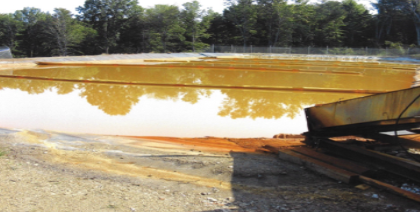
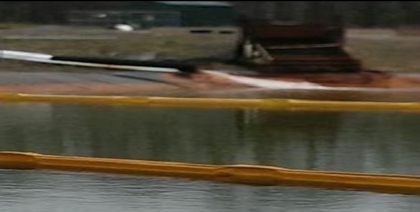
Acid Mine Drainage Water (AMD)
The AWT system has successfully converted AMD to drinking water, operating for three years without requiring maintenance. While treating acid water our system is able to separate out rare earth minerals. By precipitating out iron, followed by aluminum, the rare earth minerals can be collected for further treatment. The resulting effluent is reusable drinking water. The iron and aluminum are able to be collected and sold after further treatment.
Land-Based Fish Farms
AWT’s fish farm system, to be used by itself or for addition to existing systems. It is able to remove salt from seawater by oxidizing chloride ions (Cl⁻) into chlorine gas (Cl₂) during cavitation. It can provide any required saline concentration, depending on the application. Key features provided;
- Superior oxygenation efficiency (pure oxygen vs. air)
- Continuous pathogen destruction (ozone/radicals)
- Lower sludge production
- Reduced biofouling and easier maintenance
- Cleaner discharge water (lower BOD and COD)
The system provides:
- Lower operating costs
- Higher water quality and fish health
- Stronger environmental compliance
- Resilience against system failures
Frac Water / Oil Polluted Water
The system will remove bentonite from frac water, resolving a major problem, as Bentonite clogs up the system, and prevents reuse of effluent water. The hydrodynamic cavitation creates stable emulsions with sub-100 nm oil droplets by breaking down larger oil drops. The intense pressure and shear forces generated by collapsing cavitation bubbles break down large oil molecules into smaller ones. The resulting effluent can be reused repeatedly.
This process is used in some applications to decontaminate water by oxidizing and degrading oil pollutants. For oily sludge, hydrodynamic cavitation can improve oil recovery efficiency by disintegrating the sludge structure.
It can also help reduce the viscosity of heavy crude oil, making it easier to process. The system will also remove bentonite from frac water, allowing it perpetual reuse.
Remote Monitoring & Operation (Planned)
This system is currently in the planning stages for remote monitoring and operation capabilities. While the unit is designed to run continuously with minimal hands-on oversight, enabling remote visibility and control will further improve operational efficiency. Remote access will allow performance monitoring, diagnostics, and fine-tuning without requiring an on-site presence, reducing response time, labor demands, and overall operating costs.