Products
All systems include PLC backup, can be monitored remotely, and may be powered by existing electricity, or wind / solar (with battery storage). Dependent on size, systems may be mobile.
Drinking Water System
AWT s system will eliminate 99 + % of 1,4 Dioxane, 99 + % of all PFAS and their related chemicals.
1,4-Dioxane: A Hidden but High-Impact Contaminant
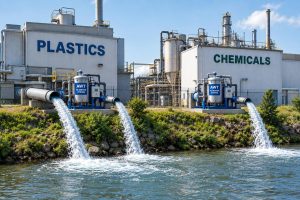
PFAS are notorious for their resistance to conventional treatment methods and are linked to serious health risks, including cancer, liver damage, and immune system disruption. Similarly, 1,4-dioxane is classified as likely carcinogenic and can cause severe liver and kidney toxicity. Both contaminants can accumulate in the environment, posing long-term risks to human health and ecosystems.
By employing hydrodynamic cavitation with AOP, the treatment effectively degrades PFAS and 1,4-dioxane into less harmful substances, reducing their presence in water supplies and mitigating their dangers to human health.
1,4 Dioxane resists natural degradation and traditional treatment methods, often necessitating advanced technologies for effective removal.
Municipal Wastewater System
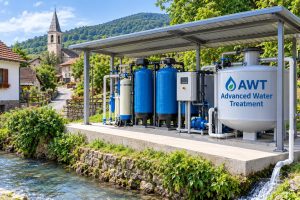
AWT’s system is designed to integrate seamlessly with existing infrastructure, or provide complete treatment for housing developments not linked to an existing wastewater facility. It effectively targets a range of contaminants, including nutrients (total nitrogen and total phosphorus), BOD, TSS, heavy metals, and reduces sludge volumes by 30-60%. The system also addresses microplastics, pharmaceuticals, hormones, 1,4-dioxane, PFAS, ammonia, nitrites, nitrates, and other emerging contaminants.
In addition, it lowers chlorides and sulfides while producing an oxygen-rich effluent. The system meets standards for reclaimed water reuse and wetland recharge. Importantly, it employs no chemicals, relying solely on oxygen and ozone as reagents.
Mining Produced Water
The AWT system treats all mineral-based mining-produced water.
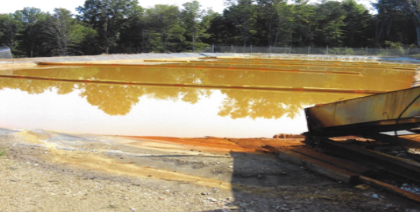
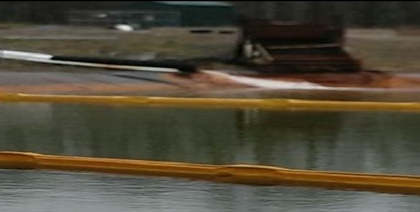
The AWT system effectively transforms acid mine drainage (AMD) into drinkable water, and operated for years with minimal maintenance. During the AMD treatment process, it separates and precipitates out minerals, starting with iron and aluminum, followed by rare earth minerals for further processing. The final effluent is clean drinking water, suitable for continuous reuse. After additional treatment, the iron and aluminum can be converted into sellable commodities. The AWT system can similarly treat all mining-produced water.
Oil well and Fracking operation produced water
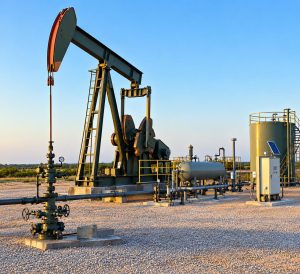
Using hydrodynamic cavitation with advanced oxidation processes (AOP) on produced water from oil well and fracking operations significantly enhances contaminant removal. This method effectively breaks down complex hydrocarbons, reduces total dissolved solids, and eliminates harmful substances like metals and emerging contaminants. The result is cleaner water that can be reused or safely discharged, improving environmental compliance and reducing waste management costs.
Environmental Remediation
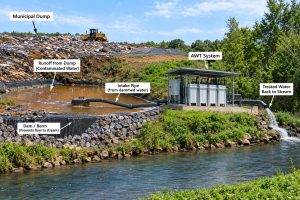
The AWT system effectively reduces pollution from farms, factories, and landfills to levels accepted by WHO. It removes chemicals from agricultural runoff, along with microplastics, pharmaceuticals, hormones, PFAS, and other emerging contaminants. The oxygen-rich effluent improves water quality over time, enabling the regeneration of aquatic life. For example, in Pennsylvania, the system revived a severely polluted stream fed by acid mine drainage within just one year.
Land-Based Fish Farms
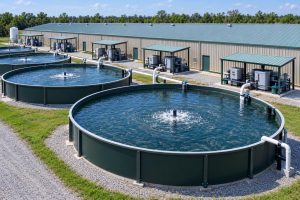
AWT’s fish farm system can operate independently or be integrated into existing setups for both brine, salt and fresh water tanks, allowing for customizable saline concentrations based on specific applications.
The AWT fish farm system offers several key features that enhance its performance. It provides superior oxygenation efficiency by using pure oxygen instead of air, ensuring optimal conditions for fish growth. The system continuously destroys pathogens through the use of ozone and radicals, contributing to a healthier environment for aquatic life. Additionally, it produces lower sludge, reducing the burden on maintenance. The design also minimizes biofouling, making upkeep easier, and results in cleaner discharge water with lower biochemical oxygen demand (BOD) and chemical oxygen demand (COD).
These features translate into significant benefits, including reduced operating costs and improved water quality, leading to better fish health. Moreover, the system supports enhanced environmental compliance and increases resilience against system failures, making it a reliable choice for land-based fish farming.
Desalinization with no salt residue
The AWT system can be integrated into existing facilities as an upgrade to remove pharmaceuticals and viruses while providing an oxygen rich effluent, or used as a standalone unit. The process is chemical-free. During cavitation, masses of free radicals are generated that transform sodium ions into caustic soda, which react with metal ions, forming solid precipitates that are removed from the water. The remaining hydrogen atom can either be released as gas or bond with other atoms. Meanwhile, chloride ions either bond with other elements or convert into chlorine gas, leaving no salt residue. The system is both efficient and cost-effective to operate.